
Heritage Site Application Fees in Turkey: Upfront Payment Now Required
If you need Ministry of Culture and Tourism approval to repair a listed building, build on a conservation area plot, or challenge a heritage designation, you now have to pay a fee upfront — before your application is even looked at. The regulations governing these heritage site application fees were published in the Official Gazette (Resmî Gazete) on 27 October 2026 (issue 33413) and came into force the same day. The key point to take on board: the fee is non-refundable, even if your application is withdrawn, refused, or later overturned by a court.
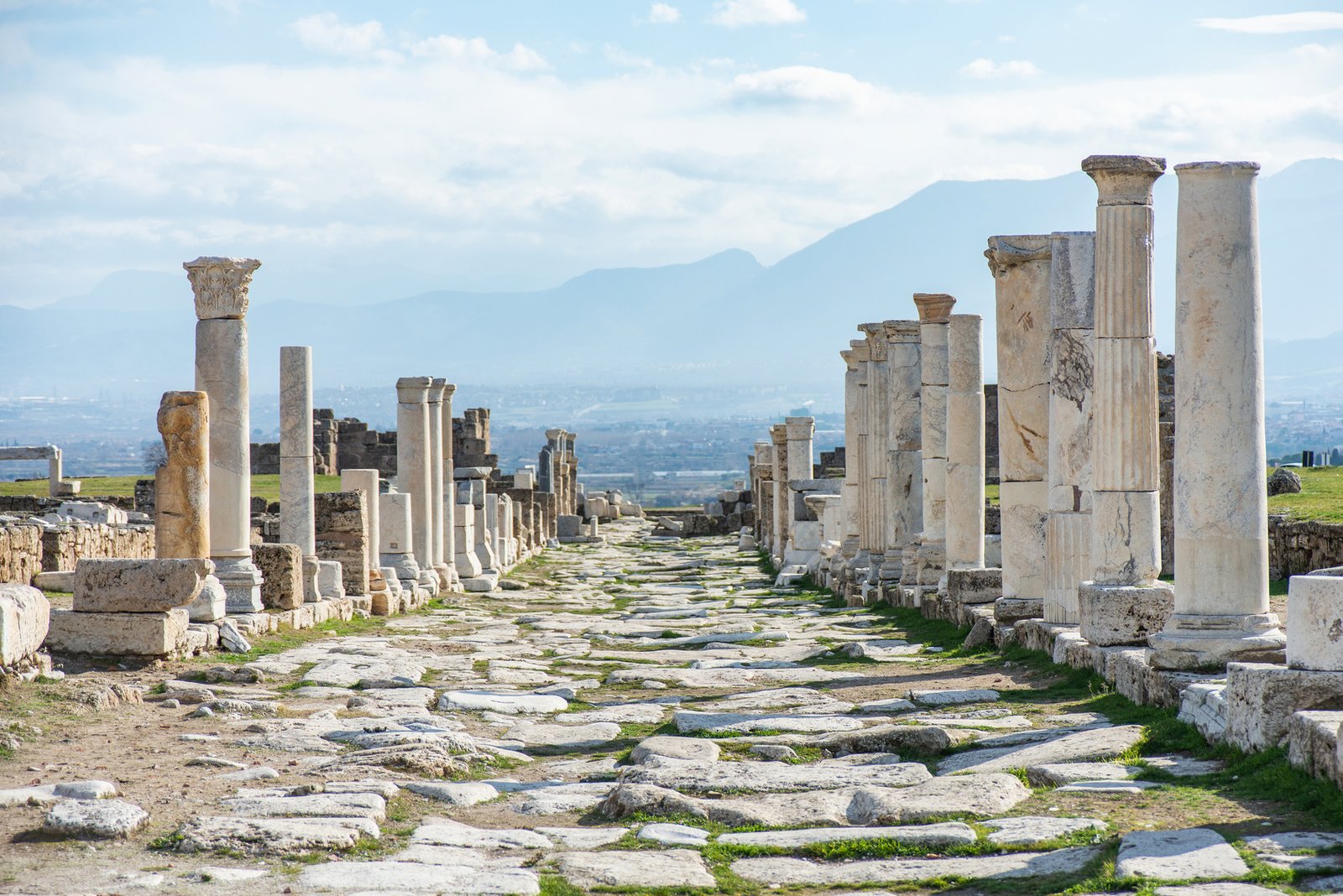
Alanya has a large number of protected sites — from the traditional buildings clustered around the castle to archaeological zones — so this change directly affects anyone who owns a listed property, holds land within a conservation area, or is developing a project in one of these zones.
Which regulation introduced the fee?
The full title of the instrument is the “Regulation on the Procedures and Principles Governing Fees Charged for Applications Made to the Ministry of Culture and Tourism and Services Rendered under the Law on the Conservation of Cultural and Natural Assets” (Law No. 2863 — the Turkish Cultural and Natural Heritage Protection Act). It was published in the Official Gazette on 27 October 2026 and, under its Article 9, took effect immediately.
The legal basis is Supplementary Article 9 of Law No. 2863 (the Cultural and Natural Heritage Protection Act, TCK 2863) (Art. 2). The actual fee amounts are not set out in the regulation itself — they appear in the Schedule (1) attached to the Act (Arts. 3–4). What the regulation does is explain when and how the fees must be paid, and when you cannot get your money back.
Who does this affect?
The regulation applies to any individual or company making an application to the Ministry under Law No. 2863. In practice, that covers:
- Owners or occupiers of a listed building (a historic house, mansion, traditional dwelling near a mosque, and so on),
- Anyone who owns property within or adjacent to an urban, archaeological or natural conservation area,
- Contractors and developers wanting to carry out planning, design or construction work in those areas,
- People who want to challenge a listing decision (İtiraz / Objection), a conservation boundary, or a Heritage Conservation Board ruling, or ask for a fresh assessment.
That last category is particularly relevant in Alanya: many landowners find that part of their plot falls within a conservation boundary and must obtain a Board opinion before they can build. This fee now becomes an additional line item that affects both the timeline and the budget of revenue-share construction agreements too.
How do you pay?
Under Article 5 of the regulation, the service fee must be paid in full before the application is processed. Payment is made to the bank accounts of the Central Directorate of the Revolving Fund Enterprise of the Ministry of Culture and Tourism, or via an electronic payment system approved by the Ministry.
You must submit your application together with the bank transfer receipt. Any application without a receipt — or where payment cannot be verified electronically — will not be accepted. If the amount paid is incorrect or incomplete, your application will be held until the shortfall is made up (Art. 7/7).
VAT is charged on top of the listed fee amounts (Art. 7/5). Where a single application covers more than one type of work, a separate fee applies to each; however, you cannot be charged twice for the same item (Art. 7/6).
Fees go up every year
The fee schedule is revalued at the start of each calendar year in line with the revaluation rate published under Article 298(B) of Tax Procedure Law No. 213 (the Turkish equivalent of an RPI-linked annual uplift). The updated schedule will be posted on the Ministry’s website every January (Art. 4). Always check the current year’s figures before you apply.
When will you not get a refund?
Perhaps the most important aspect of this regulation for applicants is how firmly the door has been shut on refunds. Articles 5 and 7 can be summarised as follows:
| Situation | Outcome |
|---|---|
| You withdraw or cancel your application | No refund |
| The application cannot be processed because of missing documents on your side | No refund |
| Your request is refused by the relevant department | No refund |
| You do not submit your application within 6 months of paying | Application not accepted; no refund |
| A court (Administrative Court) quashes the Ministry’s decision | No refund |
| You request a fresh review of a completed file | A new fee is payable |
The rule that even a successful court challenge does not entitle you to a refund (Art. 7/3) is significant: even if an administrative court sets aside the Ministry’s decision in your favour, you cannot recover the fee you paid under this regulation. That makes it more important than ever to get your application right first time, with all the correct documents in place.
The six-month rule
Once you have paid, you must submit your application to the relevant Ministry department within six months of the payment date (Art. 7/1). Miss that window and your application will not be accepted — and you will not get your money back. Time spent gathering additional documents requested by the Ministry does not count towards the six months; if a force majeure event prevents you from applying, the clock resumes from the date the event ends.
The practical takeaway is straightforward: do not pay until your project documents are ready. Paying first and then waiting for a survey report, a title deed (TAPU), or a power of attorney (PoA) risks losing both the fee and your deadline.
Who is exempt?
Article 6 of the regulation sets out only two exemptions:
- Requests for opinions on properties owned by public bodies, and
- Plans, designs, construction and similar works prepared in-house by public bodies and institutions.
There is no general exemption for private individuals or companies. Whether you are a homeowner wanting to restore a listed cottage or a developer planning a hotel in a conservation area, you pay the fee.
How fees are calculated for area-based applications
Article 8 sets out the measurement rules for fees linked to site area. The area is calculated using coordinates, approved survey sheets or official documents. For tiered fees, the total area is used. For plan amendments covering more than 5 hectares, a per-hectare rate applies; for drilling or georadar surveys exceeding 1,000 square metres, a proportional fee applies. Properties within the scope of the Bosphorus Law are charged at twice the standard rate (Art. 7/4) — this does not affect Alanya.
What should property owners in Alanya watch out for?
Between the castle district, the ancient sites within the municipal boundary and the protected coastal strips, a large number of Alanya properties are subject to Heritage Conservation Board oversight. The conservation plan processes along the Dim Çayı valley can also require applications and objections in a similar way. Here is what matters most under the new rules:
- Find out your property’s status first: Check your title deed (TAPU) and obtain a planning status certificate (imar durumu) from the local authority to see whether there is a listed-building or conservation annotation.
- Get all your documents ready before you pay: The six-month clock starts on the payment date.
- Check the current fee schedule: Fees are updated every January and VAT is added on top.
- Keep your payment receipt: Applications without a verifiable receipt will not be processed.
- Co-ordinate with co-owners and heirs: For listed buildings held in joint ownership — particularly where partition proceedings are ongoing — decide upfront who will make the application and who will cover the costs.
If you are thinking of challenging a Ministry or Heritage Conservation Board decision in court, bear in mind that the general time limit for bringing a lawsuit before the administrative courts is 60 days under Article 7 of the Code of Administrative Procedure (İdari Yargılama Usulü Kanunu). With application fees now an unavoidable upfront cost, it is worth weighing the total expense of the administrative and judicial routes together before deciding how to proceed.
This article is for general information only and does not constitute legal advice. Always refer to the current legislation and official announcements for your specific situation.
Frequently Asked Questions
Answers to the questions on your mind